
Subsea Data Systems Featured in SubCable News: The First Universal SMART Cable Sensor System
In late August 2025, an ROV settled a compact instrument package onto the seafloor at the Cascadia node of Ocean Networks Canada's NEPTUNE observatory. Months of testing, calibration, and validation later, that package earned a distinction no other system holds: the first universal SMART Cable sensor system operating and streaming real-time geophysical data, from within the Cascadia Subduction Zone itself.
SubCable News, the global newsletter for the submarine cable industry, tells the full story in its June 2026 issue (No. 288): how the deployment came together, why a single platform that works across repeatered, unrepeatered, and observatory cables changes the economics of ocean sensing, and where the SMART Cable initiative goes from here as European funding accelerates.
We're grateful to the SCN team for the deep dive, and for the chance to share it with our community. The full Special Report is below.
From SubCable News, Issue No. 288, June 2026. Republished with permission. SCN is the global information newsletter covering the whole submarine cable industry — project updates, company news, tenders, and market intelligence, delivered monthly. Learn more and subscribe at SubCableNews.com.
Universal SMART Cable Sensor Systems
Special Report
At the Cascadia node of Ocean Networks Canada’s NEPTUNE observatory, Subsea Data Systems has installed the first universal SMART Cable sensor system - a single platform built to work on repeatered and unrepeatered cables alike. The wider ambition is to make ocean and cable monitoring a standard, affordable feature of subsea infrastructure on any cable system.
In late August 2025, a remotely operated vehicle (ROV) descended to the Cascadia node of Ocean Networks Canada’s (ONC) NEPTUNE observatory, off the coast of British Columbia, and set a compact instrument package onto the seafloor. After several months of testing, calibration, and data validation, the system has been verified as the first universal SMART (Sensor Monitoring And Reliable Telecommunications) Cable sensor system deployed and transmitting real-time geophysical data. The company behind it, U.S.-based Subsea Data Systems (SDS), developed the system with initial funding from the U.S. National Science Foundation (NSF) and continued support from Schmidt Marine Technology Partners (SMTP).
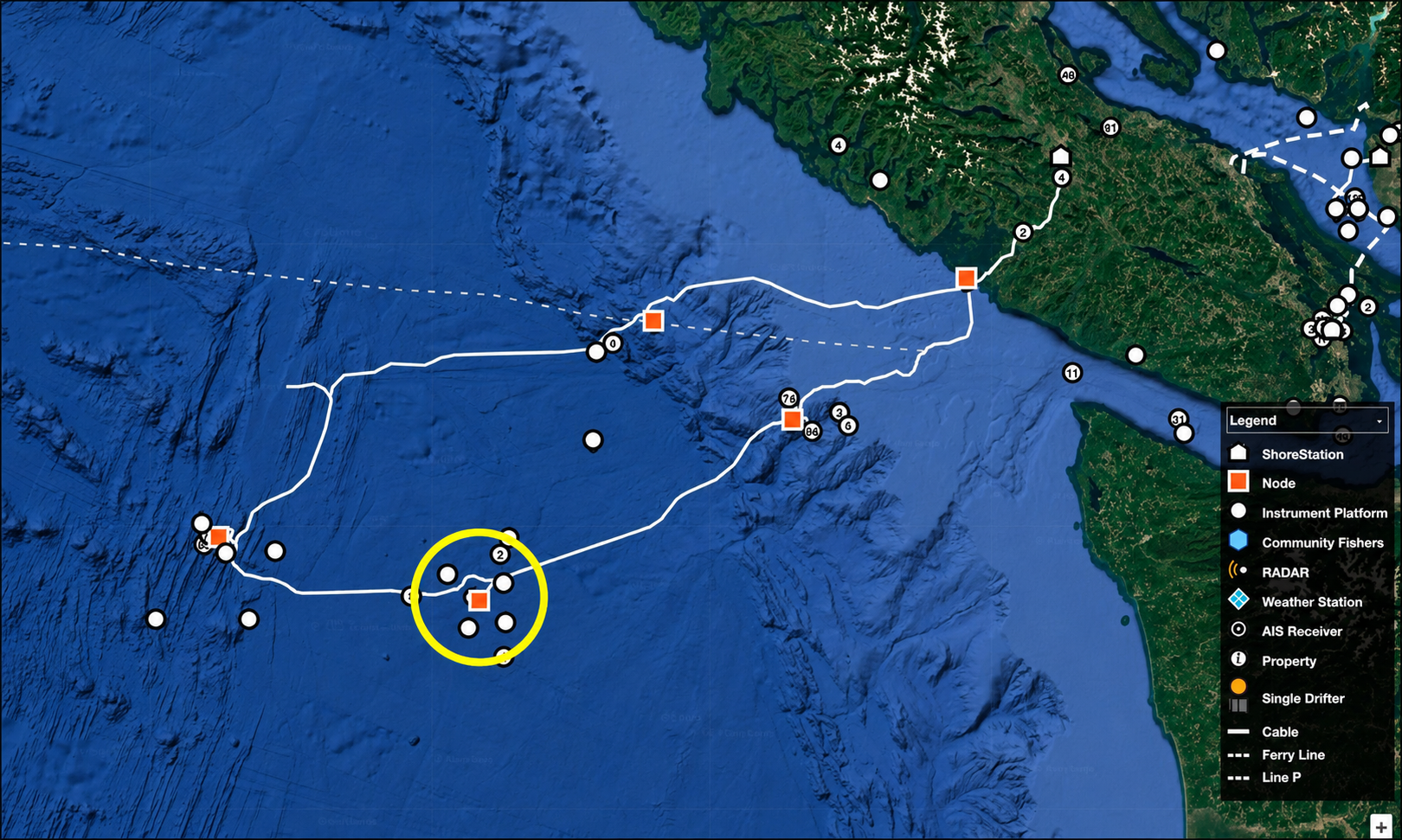
Ocean Networks Canada’s NEPTUNE observatory. The SDS sensor system was deployed at the Cascadia East node, within the Cascadia Subduction Zone (yellow circle). (Source: Ocean Networks Canada)
AT A GLANCE
System: First universal SMART Cable sensor system (seismic, pressure, temperature)
Site: Cascadia node, NEPTUNE Observatory, Ocean Networks Canada
Deployed: August 2025; commissioned operational February 2026
Funding: U.S. National Science Foundation; Schmidt Marine Technology Partners
Sensors:
Silicon Audio Seismic Omnitilt seismometer/accelerometer
Paros Absolute Pressure Sensor
Sea-Bird Oceanographic Temperature Sensor
The prototype demonstrates that seismic, pressure, and temperature monitoring can be integrated with cable infrastructure. The result is integrated, comprehensive ocean and cable monitoring systems in telecommunications infrastructure at a fraction of the current cost and complexity, a step toward a global network of financially accessible, cable-based sensors.
The security aspect of SMART Cables is timely. A series of incidents in the Baltic and elsewhere over the past two years has drawn government attention to the vulnerability of submarine cables to anchor dragging and suspected sabotage, and several EU funding lines now being opened are aimed specifically at cable protection and rapid repair.
INSIDE THE CASCADIA DEPLOYMENT
Ocean Networks Canada carried out the installation in August 2025 using an ROV, connecting the SDS package to NEPTUNE’s cabled infrastructure, a regional-scale observatory that delivers continuous power and internet connectivity to instruments on the seafloor. The NEPTUNE Observatory backbone enabled the SDS system to immediately begin operating and streaming sensor and system status data.
The Subsea Data Systems universal SMART Cable sensor system pairs Silicon Audio Seismic’s switchable Omnitilt seismometer/accelerometer, which provides high-frequency broadband seismic data, with a Paroscientific absolute pressure sensor and a Sea-Bird oceanographic temperature sensor. Following deployment, the system went through several months of testing, calibration, and data validation before being declared operational. The collaboration carried particular significance for the company: SDS leadership had helped develop NEPTUNE years earlier, and ONC’s deep engineering and scientific expertise helped the team work through the full chain of SMART deployment challenges: final assembly, data acquisition, network communications, power supply, and data management.
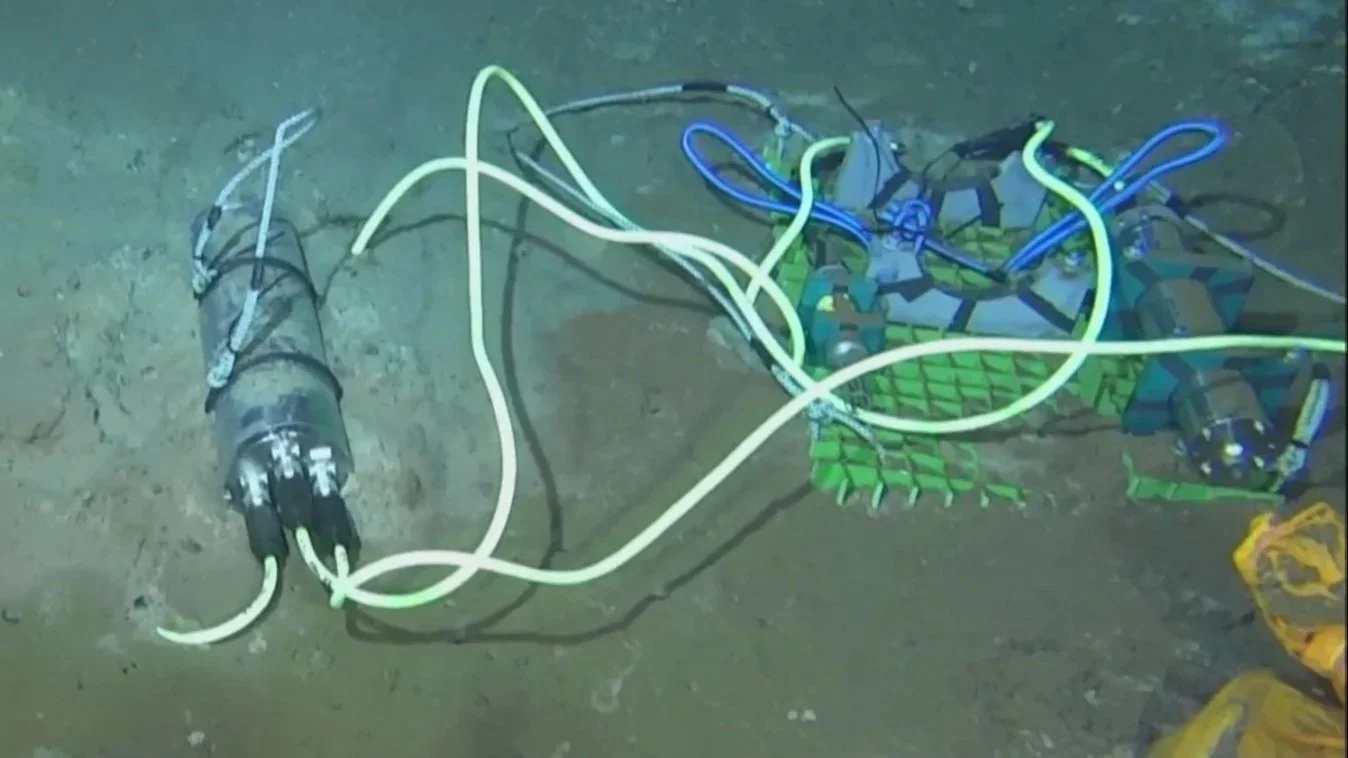
The SDS sensor system on the seafloor at the Cascadia node, installed by remotely operated vehicle in August 2025. (Source: Subsea Data Systems / Ocean Networks Canada)
The system is operational and transmitting real-time data from all sensors to the U.S. National Science Foundation’s National Geophysical Facility, with temperature and pressure data also flowing into ONC’s open-access Oceans 3.0 platform. Once commissioning is complete, the data will be publicly available through both portals. The SMART Cables Joint Task Force has framed the deployment as a major step forward for the global initiative, a first node, with the harder work of scaling still ahead.
THE CASE FOR A UNIVERSAL DESIGN
SDS has designed a single sensor system intended to install across all cable types. By building a system that works on repeatered and unrepeatered telecom systems, as well as purpose-built observatory cables, the SDS solution extends SMART Cables to the full range of cable projects. This single platform lowers the barrier for telecom owner-operators, government agencies, and research facilities to adopt sensing without committing to bespoke, single-purpose hardware.
GOALS AND MARKET CONTEXT
SDS’s work sits inside the broader SMART Cable initiative, which envisions turning the hundreds of thousands of kilometers of submarine cable spanning the oceans into a global network for earthquake, tsunami, and climate monitoring. Momentum on the funding side is concentrated in Europe: the EU’s Connecting Europe Facility (CEF Digital) has earmarked roughly €1 billion across two work programs for strategic submarine cable infrastructure, and a February 2026 amendment added a further €347 million focused on cable security and SMART capability. Portugal and France have also made substantial investments in SMART Cable projects, and the German Helmholtz Foundation has made significant grants to catalyze additional SMART Cable technological development.
More information: www.subseadatasystems.com, media@subseadatasystems.com
